Floor-standing convectors FRH
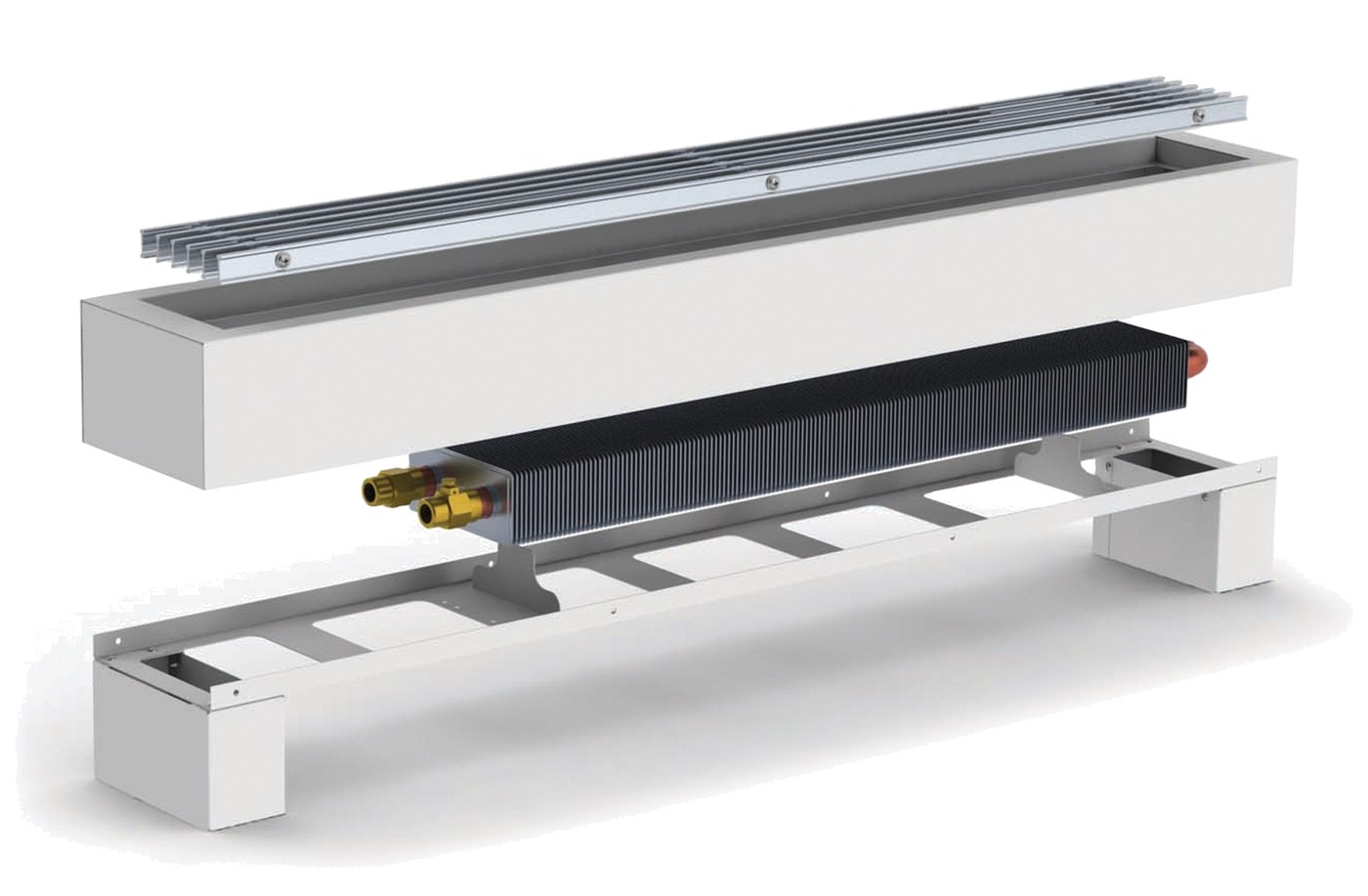
They stand on the floor along a window with a low sill or floor-to-ceiling glazing. The same thermal curtain as in-floor units — but without screed and construction work.
Output by length
Real figures from the technical catalogue. Note the 70/50 °C row — in a low-temperature system a floor-standing convector gives several times less, and that is the main reason to agree the temperature régime before buying.
| Coolant | 1000 mm | 1500 mm | 2000 mm | 2250 mm |
|---|---|---|---|---|
| FRH · 90/70 °C | 722 W | 1261 W | 1811 W | 2086 W |
| FRH · 70/50 °C | 376 W | 656 W | 943 W | 1086 W |
| FR2H · 90/70 °C | 1109 W | 1933 W | 2784 W | 3204 W |
| FR2H · 70/50 °C | 554 W | 966 W | 1392 W | 1602 W |
Casing and grille
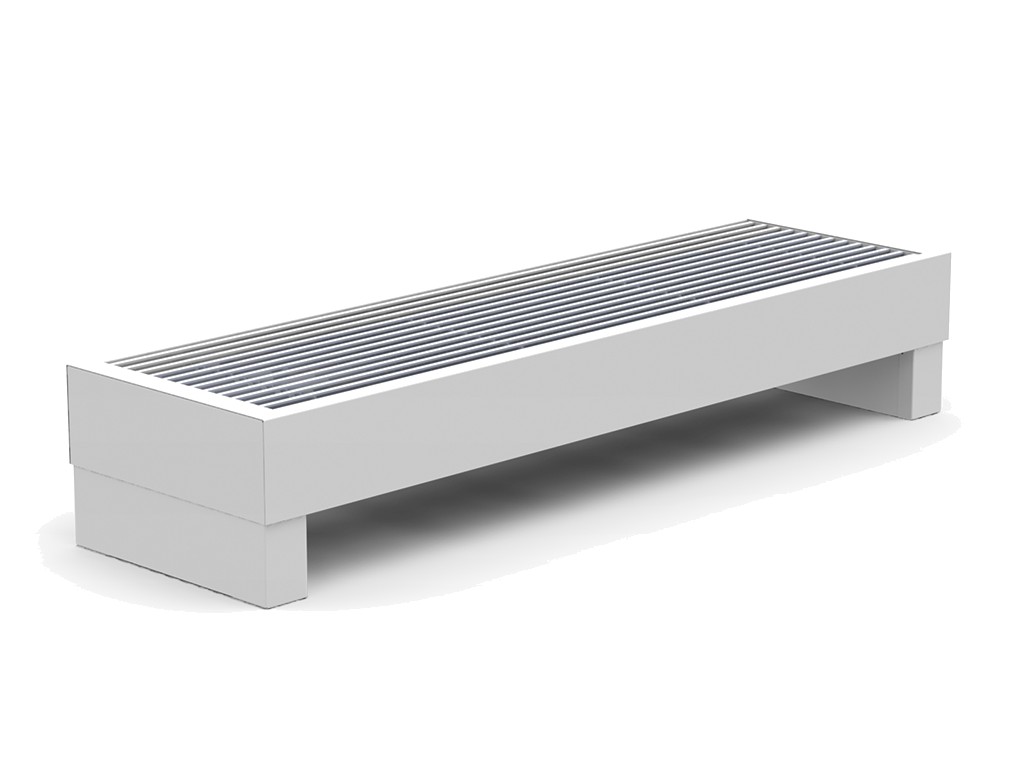
The standard version is a white casing with a “Satin” metal grille. To match the interior, the casing and grille are painted in any colour from the RAL palette; a shagreen (rough) surface texture can be ordered separately.
Line versions
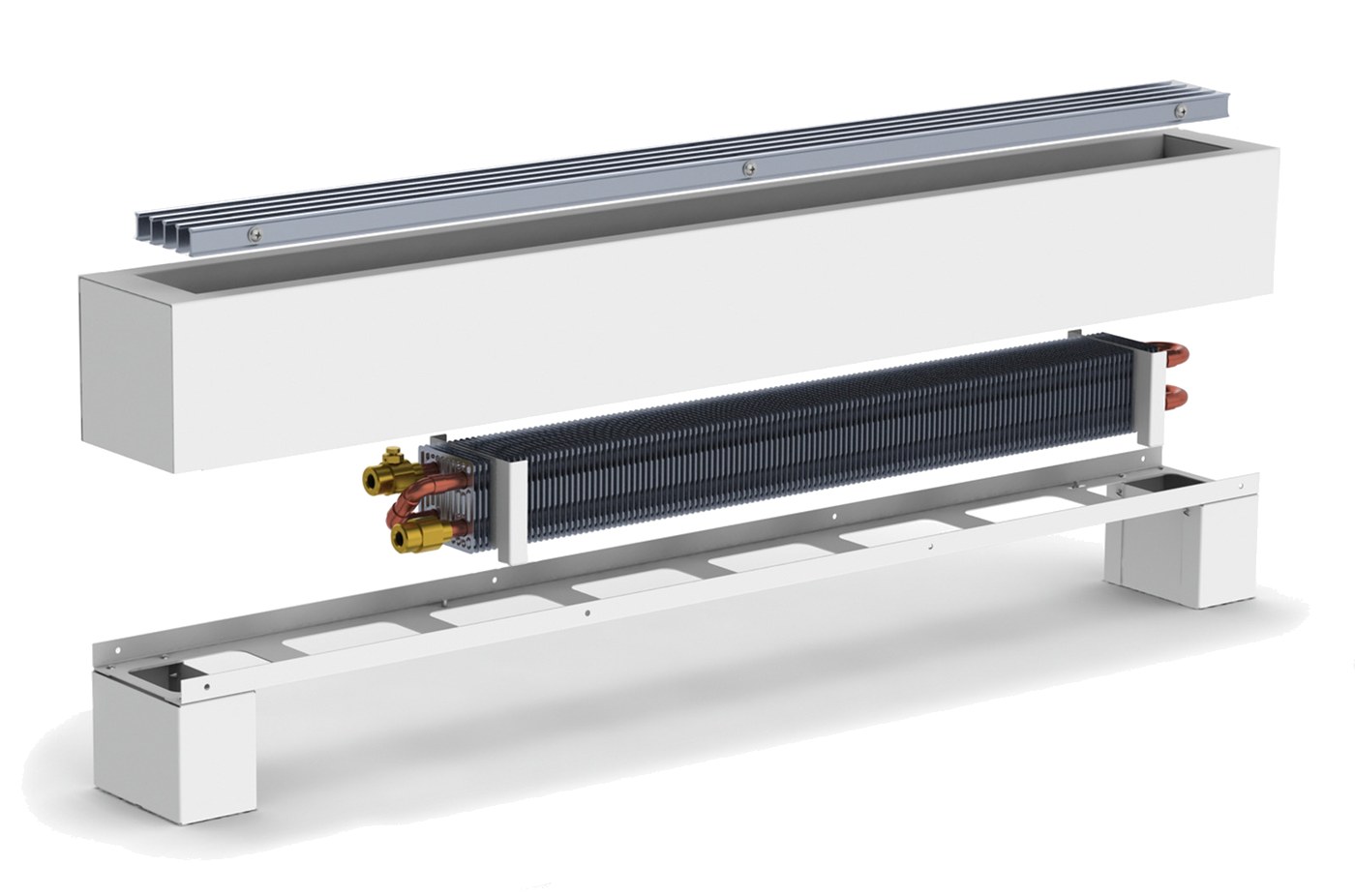
FRH — one horizontal heat exchanger. FR2H — two, up to 3204 W. 4FRH — a four-tube version, output without increasing the width. No water heating at all — there is the electric FRHE at 220 V.
When floor-standing is not the best choice
If the screed is not yet poured — lay an in-floor one: it is invisible and takes no space by the window. FRH wins when the construction stage is already behind you or the floor structure does not allow deepening.
Questions & answers
How does FRH differ from an in-floor convector?
FRH stands on the floor and needs no screed — it can be placed in a finished room. An in-floor one is set into the screed at the construction stage and is invisible in the interior.
How much heat does FRH give?
One heat exchanger — 722–2086 W depending on length (90/70 °C). FR2H with two heat exchangers — 1109–3204 W. In the low-temperature 70/50 °C mode the figures are roughly half.