Baseboard convectors BR
A low profile along the wall instead of a skirting board. Main scenarios — perimeter heating distribution around a room and retrofitting an old system where no one redoes the screed.
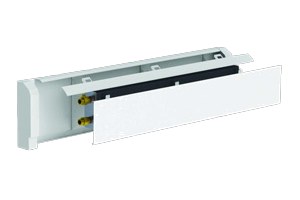
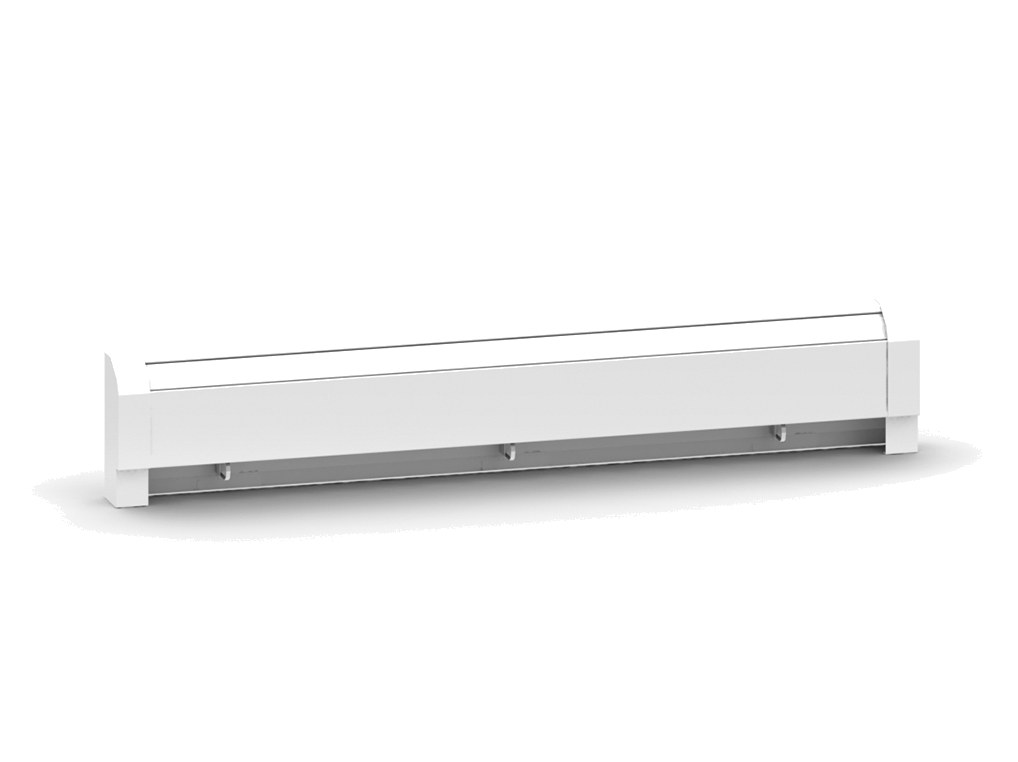 BR 18BR 18Lower profile, 379–1095 W
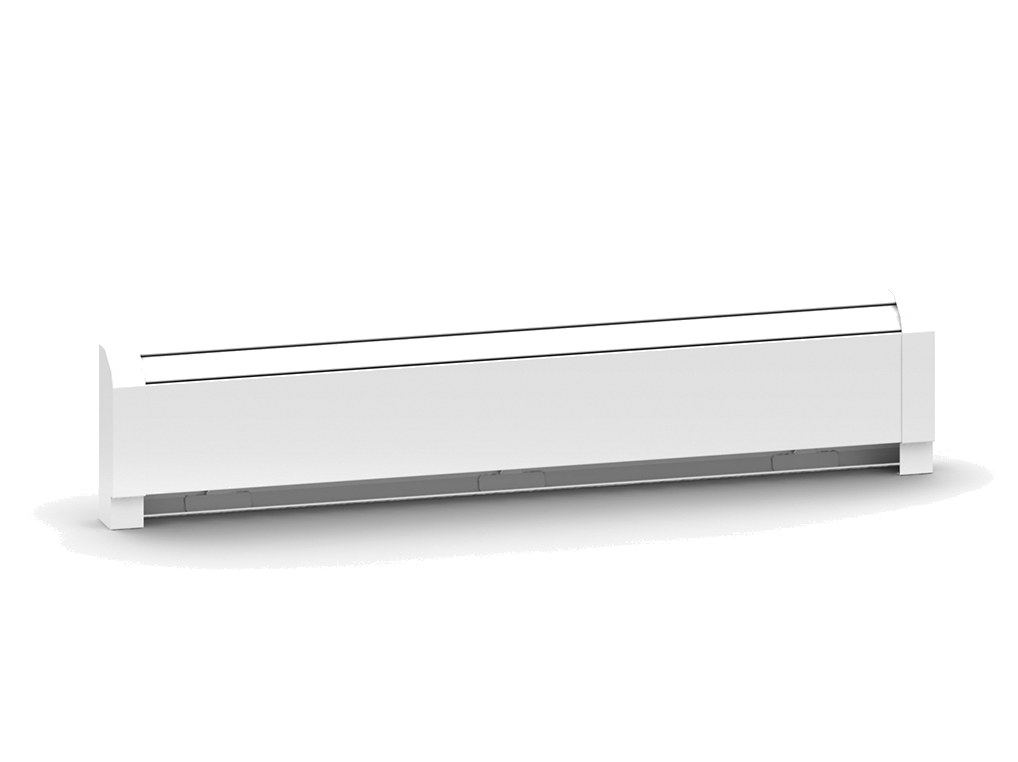 BR 21BR 21Higher heat output, up to 1513 W
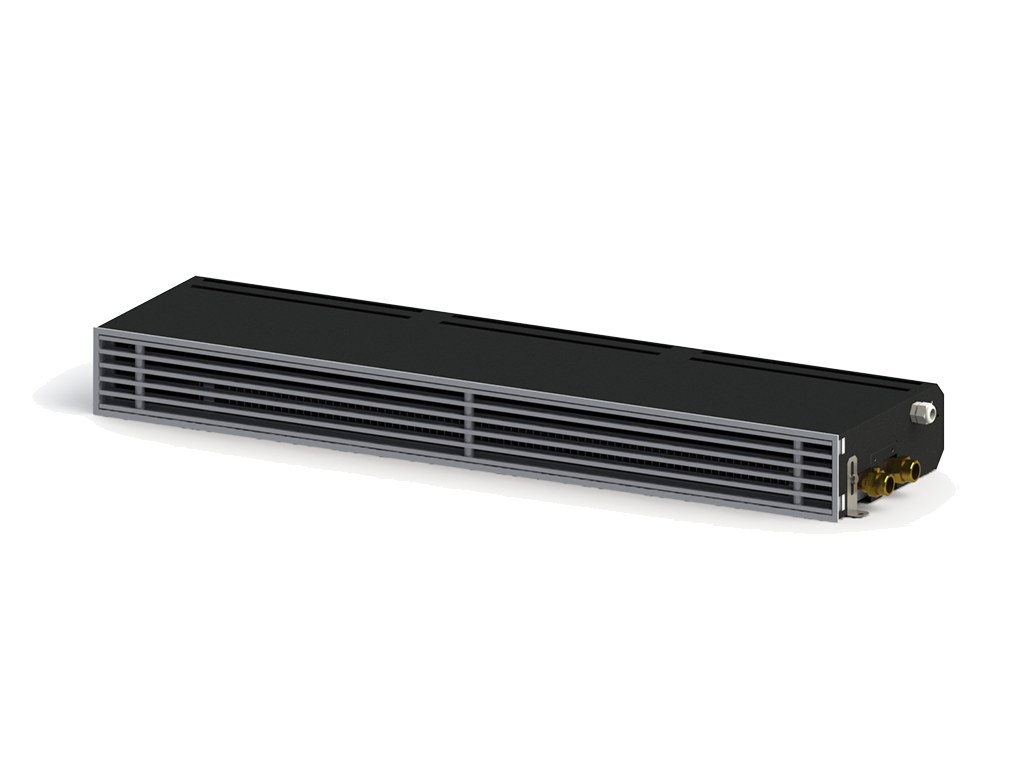 DV 80 / 105DV plinthWith a fan, up to 2217 W
Output by length
| Coolant | 1000 mm | 1500 mm | 2000 mm | 2250 mm |
|---|---|---|---|---|
| BR 18 · 90/70 °C | 379 W | 662 W | 951 W | 1095 W |
| BR 18 · 70/50 °C | 211 W | 368 W | 528 W | 609 W |
| BR 21 · 90/70 °C | 523 W | 915 W | 1314 W | 1513 W |
| BR 21 · 70/50 °C | 281 W | 492 W | 707 W | 814 W |
What people learn too late
A skirting loop is not just the units. Corner elements, joints and end caps are needed to assemble it around the perimeter. If they are not ordered together with the convectors, installation will stall. Count the room's corners before ordering — we will put the kit together at once.
The casing and grille are painted in any RAL colour — the skirting line can blend with the wall or, on the contrary, work as an accent.
Need more power — plinth DV
When the perimeter heat is not enough, the same screed-free installation is provided by DV 80 and DV 105 plinth convectors with a fan: DV 105 delivers up to 2217 W at 1750 mm (90/70 °C, second speed). They are fitted vertically or horizontally; with the fan off they work as ordinary natural convection.
Questions & answers
What is needed for installation besides the convectors?
Corner elements, joints and end caps to assemble the loop around the perimeter. They are ordered together with the units — count the room's corners in advance.
BR 18 or BR 21 — which to choose?
BR 21 gives noticeably more heat (523 vs 379 W per metre of length) — take it if the 21 profile fits. BR 18 — when the minimum line height is critical.